Posted 2014-02-10 5:23 PM (#157419) Subject: Advice on Weight Distribution Hitch
New User
Posts: 2
Location: Denver
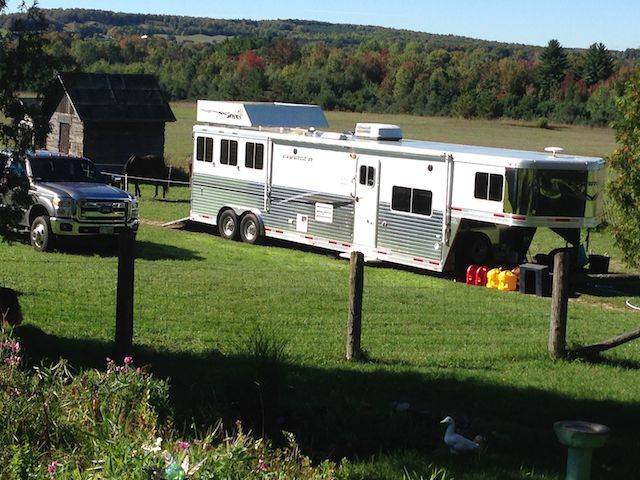
I just bought a used trailer (2h Slant S&H). I have an F150 that can tow #7400 with a WD hitch or #5000 with a dead weight hitch. I took the trailer in to have it serviced and also asked to have them install a WD hitch on my truck for me. They said they hooked up the trailer to a WD hitch and it looks like the trailer is too low to the ground to accomidate a WD hitch. They think the bars will get bent if I go through a low dip in the road.
The trailer is probably #2500 pounds empty and #4500 with two horses loaded. If you through in some water and tack you are getting close to that #5000 limit.
Does anybody have any recommendations other then getting a different trailer. I just bought this one and put new tires on it.
Posted 2014-02-10 5:50 PM (#157420 - in reply to #157419) Subject: RE: Advice on Weight Distribution Hitch
Veteran
Posts: 218 Location: Ohio
The level of the trailer should not be affected by the truck. The trailer is level of its own right. If it were me and I had the option, I would put the load levelers on. It is safer and would give you some room on weight. I also am a little conservative. I don't like to run the weight limits right to the edge. I would rather be over trucked than over weight.
The weight distro hitch is just an hitch insert like any hitch though. The attachments go on the trailer.
Posted 2014-02-10 6:02 PM (#157421 - in reply to #157420) Subject: RE: Advice on Weight Distribution Hitch
New User
Posts: 2
Location: Denver
While I would like to use the WD hitch I am told there isn't enough clearance on the trailer to have the WD bars hanging down without getting possibly damaged while towing. I'm wondering if I should take the trailer somewhere else and get another opinion? I could also just use a normal hitch with just one horse and switch to the WD hitch when towing more then one horse?
Posted 2014-02-10 6:05 PM (#157422 - in reply to #157419) Subject: RE: Advice on Weight Distribution Hitch
Veteran
Posts: 218 Location: Ohio
I can't imagine that the trail sits so low that weight distro bars would not work. I would get another opinion. I may be wrong but seems a little odd to me.
Posted 2014-02-10 10:11 PM (#157424 - in reply to #157419) Subject: RE: Advice on Weight Distribution Hitch
Expert
Posts: 5870 Location: western PA
You can also add suspension aids like Timbrens or air bags. They will ensure a level ride of the truck after it is hitched. Using these devices will eliminate the need for a WDH, and allow you to pull many different trailers without using the additional linkage on each one.
Posted 2014-02-11 9:37 AM (#157426 - in reply to #157419) Subject: RE: Advice on Weight Distribution Hitch
Expert
Posts: 2960 Location: North Carolina
Gard .. I would not say that Timbrens or suspension upgrades are equivalent to a weight distributing hitch. The WDH actually transfers force/weight to the front of the tow vehicle. The added force on the steer tires increases traction and control. Rear suspension upgrades do nothing there.
Posted 2014-02-12 9:24 AM (#157450 - in reply to #157419) Subject: RE: Advice on Weight Distribution Hitch
Expert
Posts: 5870 Location: western PA
Stephen, as you know, the amount of weight being transferred to the front wheels of a towing vehicle whilst using a WDH system, greatly varies from rig to rig. The many differences are caused by the variables of weight, hitch to axle measurements and hitch heights.
"The added force on the steer tires increases traction and control. Rear suspension upgrades do nothing there."
Actually this is not true. The traction is reduced proportionately by the same amount of weight that is transferred to the front wheels. This result often manifests itself on the wet grass or muddy conditions found in the parking areas of show grounds. I and others of our club have pulled out WDH equipped vehicles that became stuck under these conditions. Traversing poor roads that involve snow, ice, heavy rains and even gravel, can be compromised by the reduced rear wheels' traction.
A rear suspension upgrade INCREASES the traction on the driven wheels, by each additional pound of weight carried on the hitch.
A WHD system can be bothersome on rough uneven roads such as BLM travels. It can also be impacted by the varying road conditions found on the uneven transitions between roadways, driveways and parking lots. A low hitch combined with a WDH, can result in a minimal ground clearance, resulting in some interference problems.
And Stephen, as you know, many half ton trucks are used for transportation and not primarily for hauling. The manufacturers have had to provide a suspension compromise between a smooth ride and weight hauling capabilities. Usually the ride is a major concern. The trucks may be able to carry the advertised loads, but when doing so, they will be quite settled on their rear suspensions, drooping significantly in the back.
Timbrens and air bags will solve this deflection issue. They will not change the suspension carrying capacities beyond the OEM components and tire capabilities. With a WDH, each trailer has to be set up to exactly match the towing vehicle. If the owner wishes to pull anything other than this set up, he will again encounter the settling problems or has to have multiple WDH set ups on each trailer.
If that same owner is a weekend DIYer and needs a few pieces of drywall or a load of wood, he once again has a suspension that won't support on a level, these occasional loads. A Timbren or air bag supplement, will eliminate these problems without involving the support from a trailer. Timbrens and air bags can be set up to not change the original unladen ride, whilst proving a level ride under varying load conditions. Once installed, these life time systems are autonomous and trouble free, costing a similar amount to one WDH installation.
"I would not say that Timbrens or suspension upgrades are equivalent to a weight distributing hitch." You're correct, they are not.



 Advice on Weight Distribution Hitch